MuLTEERatcliff Lab · Georgia Tech

Team

The MuLTEE has been running since 2018, with daily transfers. The experiment is maintained by a small permanent core, a rotating group of graduate and undergraduate researchers, and collaborators on three continents.


Leads and contacts

Who to write to

William C. Ratcliff

William C. Ratcliff

Professor, School of Biological Sciences, Georgia Tech

Co-founder of the MuLTEE. He developed the snowflake yeast system from around 2010 as a postdoc in Michael Travisano's lab at the University of Minnesota, where daily settling selection was first used to evolve multicellularity de novo, and moved to Georgia Tech in 2014. Senior author of the 2023 Nature macroscopic-size paper and co-PI on the NSF LTREB award that funds the experiment.

ratcliff@gatech.edu

G. Ozan Bozdag

G. Ozan Bozdag

Senior Research Scientist, Georgia Tech

Co-founder of the MuLTEE, and the person who runs it day to day. He proposed and designed the metabolic treatment scheme that removed the oxygen limit on cluster size, founded the original twenty populations in 2018, and kept fifteen of them going after that study ended, which is what made the MuLTEE long-term. First author of both the 2021 oxygen paper and the 2023 Nature macroscopic-size paper, and PI on NSF award 2452109, the LTREB grant behind the 2025–2035 decadal plan.

Strain requests · scientific scoping

gonensin.bozdag@biology.gatech.edu

Dung T. Lac

Dung T. Lac

Research Scientist, Georgia Tech

Joined the lab in 2021. She manages strain distribution and leads omics data collection, and is studying the role of Hsp90 in macroscopic adaptation through a replay evolution experiment. Co-author on the 2023 macroscopic-size, 2024 coexistence, 2024 Hsp90 and 2025 genome-duplication papers.

Strain requests · logistics and shipping

dlac3@gatech.edu


Current contributors

Working on MuLTEE populations now

Anthony J. Burnetti

Anthony J. Burnetti

Research Scientist, Georgia Tech

Studies how life gets around the limit that oxygen places on multicellular size, including phototrophy and oxygen-binding globins. Senior author of the 2025 PLOS Biology paper on oxygen-binding proteins. Co-author on the 2023 macroscopic-size, 2024 Hsp90 and 2024 entanglement papers. PhD from Duke on the yeast metabolic and cell division cycles.

Sayantan Datta

Sayantan Datta

PhD student, QBioS

Works on the life history of nascent multicellular yeast and the evolution of cell differentiation. Co-author on the 2025 genome-duplication paper and the 2025 super-resolution imaging paper. BS-MS from IISER Pune.

Luis Felipe Cedeño-Pérez

Luis Felipe Cedeño-Pérez

PhD student, QBioS

First author of the 2025 paper on coordinated cell division, which showed that the anaerobic lines lost the ancestral first-division delay by day 200 and stayed synchronous through day 1,000. He began on evolved trade-offs in snowflake yeast during a year-long internship before the PhD. Genomic Sciences, UNAM.

Hikaru Katani

Hikaru Katani

PhD student, Biology, Georgia Tech

Working with Dung Lac and Ozan Bozdag on emergent gene expression patterns in S. cerevisiae under anaerobic, mixotrophic and aerobic regimes.

Liam Adamson

Liam Adamson

Lab technician, Georgia Tech

Completed his Master's in the lab and now works there as a lab technician. Tests whether evolved MuLTEE strains can revert to unicellularity by engineering a functional ACE2 allele back into them.
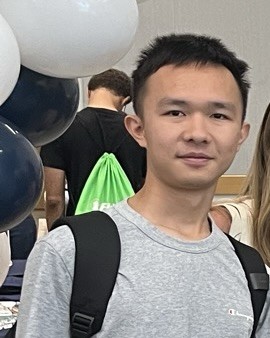
Ziyue (Justin) Kong

Ziyue (Justin) Kong

PhD student, Biology, Georgia Tech

Studies the entrenchment of multicellularity in the MuLTEE lines through genetic engineering and experimental evolution. BSc in Computational Biology, University College London.
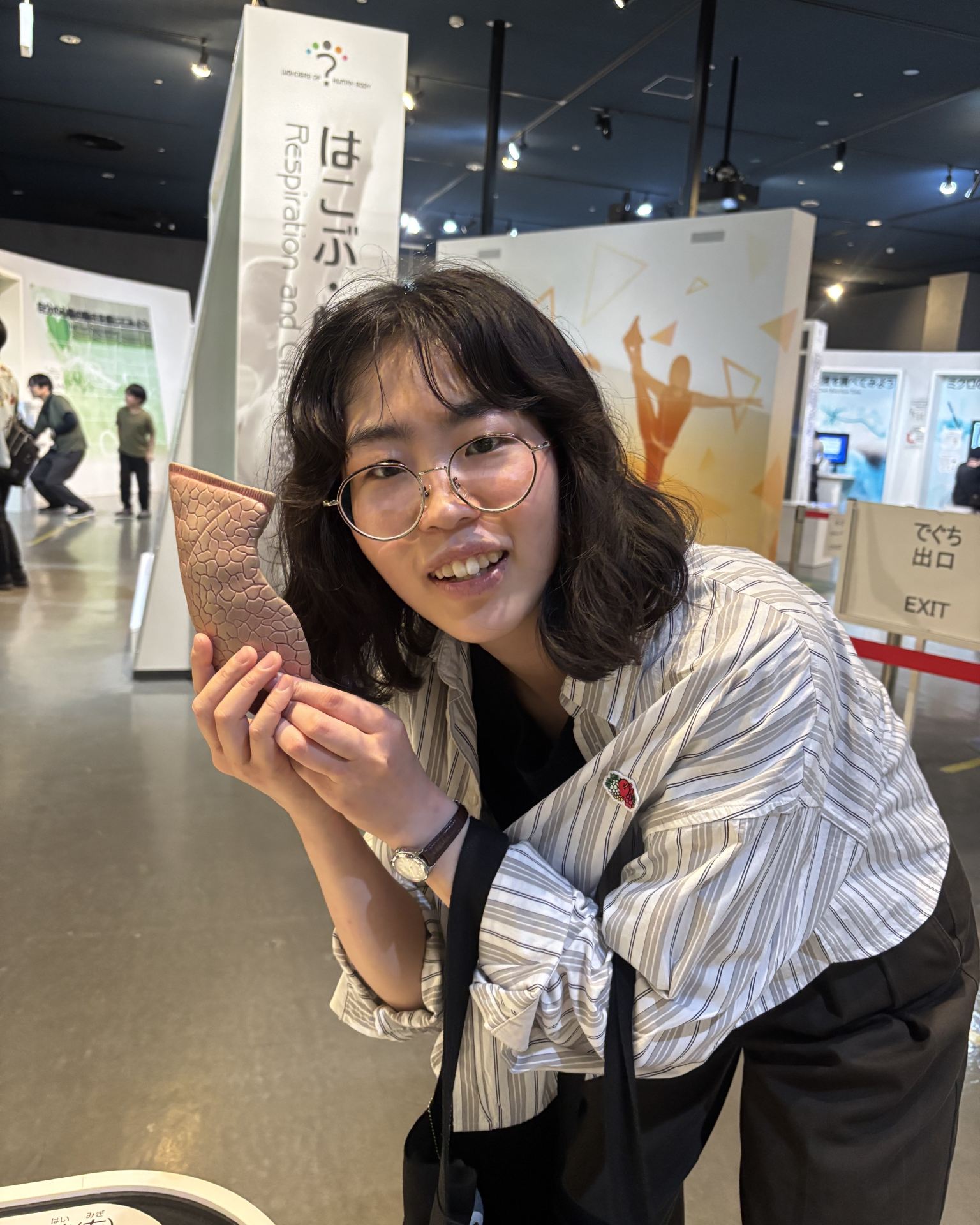
Ryoka Kuwabara

Ryoka Kuwabara

PhD student, QBioS

Works on the evolution of metabolically driven flows in the anaerobic (PA) populations. BEng, Waseda University, 2026.

Nadav Shammai

Nadav Shammai

Visiting undergraduate, Imperial College London

Examines how population size and cluster size differ between microscopic and macroscopic populations, and what those differences mean for population genomics.

The lab is larger than this list. Named here are the members currently working on MuLTEE populations; the full roster is on the Ratcliff Lab people page.


Alumni credits

Former members who built the experiment

Much of the work described on this site was done by researchers who have since moved on.

  • Kai Tong First author of the 2025 Nature genome-duplication paper; co-author on the 2023 macroscopic-size and 2024 Hsp90 papers. Now a postdoc at Harvard.
  • Thomas C. Day First author of the 2024 Physical Review X entanglement paper; co-author on the 2023 macroscopic-size, 2024 coexistence, 2025 genome-duplication and 2025 cell-division papers. Now a postdoc at USC.
  • Rozenn M. Pineau First author of the 2024 Nature Ecology & Evolution coexistence paper, and a co-author on the 2025 cell-division paper. Now a postdoc at Utah State.
  • Peter L. Conlin Postdoc in the lab; senior author of the 2025 cell-division paper and co-author on the 2023 macroscopic-size, 2024 entanglement and 2025 genome-duplication papers. Now a research scientist in the Rosenzweig lab at Georgia Tech.
  • Seyed Alireza Zamani-Dahaj Second author on both the 2023 macroscopic-size paper and the 2024 entanglement paper, the two results that established how evolved clusters hold together.
  • Emma P. Bingham Co-author on the 2024 entanglement paper and on the study of metabolically driven flows in millimetre-scale clusters.
  • Penelope C. Kahn Research technician on the experiment and a co-author of the 2023 Nature macroscopic-size paper.
  • Vivian Cheng, Daniella J. Haas and Saranya Gourisetti Undergraduate and Master's researchers, co-authors of the 2025 genome-duplication paper.

Many more people worked on the lab's earlier snowflake yeast research; those papers are on the Publications page.


Collaborators

Collaborating groups

  • Peter J. Yunker School of Physics, Georgia Tech. Co-author on the 2023 macroscopic-size, 2024 entanglement, 2024 coexistence and metabolically-driven-flow papers, and holds joint grants with Ratcliff that fund the biophysics work.
  • Juha Saarikangas HiLIFE and Faculty of Biological and Environmental Sciences, University of Helsinki. Senior author of the 2024 Science Advances paper on proteostatic tuning, which found the Hsp90 mechanism behind cell elongation.
  • Kristopher Montrose University of Helsinki. First author of that same proteostatic tuning paper.
  • Shashi Thutupalli Simons Centre for the Study of Living Machines, National Centre for Biological Sciences (TIFR), Bangalore. Senior author of the work showing that metabolism drives circulatory flows through millimetre-scale clusters.
  • Eric Libby Department of Mathematics and Mathematical Statistics, Umeå University. Co-author of the 2024 coexistence paper and of the 2021 oxygen paper, which reported the first 145 transfers of the twenty populations the MuLTEE grew out of.

Working with the experiment

Any population from any archived timepoint can be requested, and sharing the archive is a central aim of the project. Requests go through the strain request page. For anything else, write to Ratcliff or Bozdag at the addresses above.